

Buyer’s Rights Against a Developer in Turkey for Unfinished Work, Defective Construction and Late Property Delivery
Under Turkish law, in cases of late property delivery, unfinished work or defective construction in a home bought from a developer, the buyer may demand that the shortcomings be remedied, a price reduction, rescission of the contract, and delay compensation including loss of rent. Which of these rights can be used, within what time limit and before which court depends on the nature of the problem and the capacity in which the buyer is a party to the contract.
Consumer complaints against residential construction companies show that a significant proportion of the problems faced by people who buy a home from a contractor in Turkey arise from late delivery of the home and incomplete or defective workmanship. According to data from the Şikayetvar platform, the number of complaints against residential construction companies rose by 127 percent in less than a single year, and the figure of 1,482 complaints in 2025 climbed to 3,363 as of August 2026. The same data show that delay in delivery of the home and incomplete or defective workmanship stand out among the subjects most often complained of.
Under Turkish law, a shortcoming in a home bought from a construction company and a failure to deliver the property on time are governed by two entirely separate legal regimes and obligation relationships:
- Incomplete and Defective Work: This brings into play the provisions on warranty against defects (TCO Art. 219 et seq. / Consumer Protection Law Art. 9 et seq.).
- Late Delivery (Delay of the Home): This brings into play the provisions on debtor’s default (TCO Art. 117 et seq.).
The resolution of the dispute takes shape within the framework of the Turkish Code of Obligations No. 6098 (TCO) and the Consumer Protection Law No. 6502 (CPL), according to the capacity in which the buyer is a party to the contract (consumer or commercial buyer). Seen this way, the subject is an important field of practice where real estate law in Turkey, the law of obligations and consumer law intersect.
This article deals with the legal routes that may be followed where a home bought from a developer has incomplete work or a defect, the compensation and other legal claims that may be sought where the home is delivered late, the competent court and routes of application according to the dispute, together with rights subject to time limits and the possible loss of rights. The summary table below shows at a glance which legal regime governs each of the three basic problems in Turkey and the key time limits.
What Types of Legal Relationship Exist When Buying a Home from a Developer in Turkey, and Why Does the Buyer’s Capacity Matter?
Where a home bought from a developer in Turkey has incomplete construction, defective workmanship or a delay in delivery, the legal routes to be followed differ in every concrete case. The most basic mistake made in practice is to assume that every buyer who acquires property from the same contractor has the same legal status. Yet the first step that decides the fate of the legal process is the correct identification of the legal capacity in which the buyer is a party to the contract.
The nature of the contract directly changes the statutory provisions to be applied, the forfeiture periods and the competent court. In Turkish legal practice three basic types of legal relationship stand out:
- Sale of a Home in the Capacity of Consumer: This is the relationship formed by people who buy the home for personal housing purposes rather than professional or commercial ones. It gives the consumer additional statutory protections and an exemption from certain fees; disputes are heard by the Consumer Court.
- Construction Contract in Return for Land Share: This is a work contract under which the landowner acquires independent units in return for transferring shares in the land. As a rule the landowner is not regarded as a consumer, and disputes fall within the jurisdiction of the Civil Court of First Instance.
- Acquisition by External Sale / Assignment of a Claim: This is the contractor’s transfer of the independent unit that will fall to him to a third party without complying with the official form requirement. It does not transfer ownership, but it is treated as an assignment of a claim (TCO Art. 183).
1. What Is the Position of a Buyer Who Purchases a Home from a Developer as a Consumer in Turkey?
Natural or legal persons who buy the home without any commercial or professional purpose, purely for personal use or as a place to live, hold the capacity of consumer under Turkish law. It makes no difference that the seller is a contractor, a construction company or a project developer; the relationship falls directly within the scope of Consumer Protection Law No. 6502 (CPL).
The main legal advantages that consumer status gives the buyer in Turkey are as follows:
- Extended Protection: In addition to the general law of obligations, the right to have the item replaced with a defect-free equivalent and the principles of interpretation in favour of the consumer apply.
- Statutory Exemptions: Cases brought before the Consumer Courts are exempt from certain court fees.
- Off-Plan (Pre-Paid) Home Sale Regime: Where the home is bought from the project before it is finished, with the price paid in cash or in instalments (off-plan / foundation-stage sale), extra protective rules come into play under CPL Art. 40 et seq., such as the obligation to provide security and the impossibility of concluding a contract before a building permit is obtained.
2. What Is the Position of the Landowner in a Construction Contract in Return for Land Share in Turkey?
Under Turkish law, in a construction contract in return for land share (a flat-for-land construction contract), the landowner transfers certain shares in his land to the contractor; in return the contractor undertakes to build independent units on the land and deliver them to the landowner. Under Art. 470 of the Turkish Code of Obligations (TCO) this relationship is a work contract.
Here, under Turkish law, the developer is in the position of the “contractor”, and the landowner in that of the “owner of the work”. The independent units built are in the nature of the price payable for the work the contractor has produced.
- Not a Consumer as a Rule: According to the settled case law of the Court of Cassation, the landowner is as a rule not regarded as a consumer. This is because the landowner’s aim is not to acquire a consumer good directly but to make economic use of the land he holds.
- Competent Court: In disputes between the landowner and the contractor the competent court is not the Consumer Court but the Civil Court of First Instance.
- Annotation on the Land Register: Under Turkish law the landowner’s contractual right is a personal right capable of being annotated on the land register. Article 1009 of the Turkish Civil Code expressly lists rights arising from a construction contract in return for land share among the rights that may be annotated.
- Annotation of the Notarial Contract: Land Registry Law Art. 26 likewise provides that construction contracts in return for land share drawn up by notaries shall, at the request of either party, be annotated on the land register.
3. What Is the Position in Turkey of Third Parties Who Buy a Home from a Contractor by External Sale (Without Complying with the Official Form)?
It is very often seen in practice in Turkey that the developer sells the independent units due to come to him from the landowner to third parties before the title deed has been transferred. However, under Article 706 of the Turkish Civil Code and Article 237 of the Turkish Code of Obligations, sales of immovable property and contracts creating an obligation to transfer ownership must be made in official form (a promise of sale before a notary, or before the Land Registry Office).
The consequences and risks for the buyer of an external sale made without the official form in Turkey are as follows:
- No Transfer of Ownership: Without an official promise of sale executed before a notary, external sales contracts made between the parties in ordinary written form do not transfer ownership.
- May Count as an Assignment of a Claim: Such contracts may nevertheless be treated as a transfer to a third party of the developer’s right to demand the title deed of the independent unit from the landowner (TCO Art. 183 – assignment of a claim). Because an assignment of a claim must be made in writing under TCO Art. 184, this result requires that the informal contract has at least been made in writing.
- The Land Registry Record Must Be Checked: To avoid a loss of rights in purchases of this kind, it is vitally important to examine the annotations, mortgages, attachments and construction servitude declarations on the land registry record in detail before the sale.
- Possible Criminal Liability: Where the developer collects the price with no intention of performing from the outset or sells the same independent unit to several people under external contracts, alongside the civil claims the offence of fraud may also give rise to criminal liability under Turkish law. In that case the buyer may also file a criminal complaint with the Chief Public Prosecutor’s Office alongside the civil action.
4. What Is the Position of People Who Buy a Flat from a Developer Under a Promise to Sell Agreement in Turkey?
Under Turkish law, the most common form of buying a flat from a developer is the promise to sell agreement for immovable property (also referred to as a preliminary sales contract). Where the construction is not yet finished, no construction servitude has been established, or the price is to be paid in instalments, the title deed cannot be transferred straight away; so, instead of a final sale that passes ownership immediately, the parties conclude a preliminary contract (a promise of sale) undertaking that the title deed will be transferred at a later date.
Under Turkish law this transaction does not give the buyer a right of ownership (a right in rem); it gives only a personal right (a claim) to demand that the title deed be transferred. In other words, signing the contract does not make the buyer the owner of the property; it only gives him a power to demand registration in the sense of the law of obligations from the developer. This basic legal distinction between ownership and a personal claim directly decides the whole procedure to be followed and the fate of the case where the contractor falls into default or third parties intervene, so it must be fully grasped at the very first stage of any dispute before the Turkish courts.
a. In What Form Must a Promise to Sell Agreement Be Made in Turkey?
Article 237 of the Turkish Code of Obligations lays down that a promise to sell immovable property is not valid unless it is drawn up in official form. Notaries Law Art. 89 expressly lists the promise to sell real estate among the contracts which by their nature require a transaction at the land registry, and provides that they must be executed as a notarial deed.
The form requirement here is the point most often misunderstood in practice. The following distinctions are decisive for validity under Turkish law:
- A Deed Drawn Up by the Notary: For validity the contract must be concluded as a deed drawn up by the notary.
- Certification of Signatures Is Not Enough: A text prepared at an estate agency or between the parties and taken to the notary only for certification of signatures does not count as a deed drawn up by the notary.
- Consequence of Breach of Form: A preliminary sales contract concluded in ordinary written form or by way of signature certification is as a rule invalid under Turkish law. In that case the buyer cannot demand transfer of the title deed on the basis of the contract. Whether he may demand repayment of the price he has paid is assessed separately. In off-plan (pre-paid) home sales, however, under CPL Art. 41/1 the seller cannot rely on the breach of form against the consumer.
In Turkish property law, although the official form requirement is the rule in contracts concerning the transfer of immovable property, there is a settled exception to it, shaped by the principle of good faith (TCC Art. 2). Where the obligations have largely been performed, relying on the defect of form may amount to an abuse of rights.
As the Assembly of Civil Chambers of the Court of Cassation also expressly stated in its decision dated 16.12.2021, Case No. 2018/453 and Decision No. 2021/1702; although contracts concluded without complying with the official form are as a rule invalid, once the obligations have been performed reciprocally in full or to a substantial extent, the defect of form can no longer be invoked in a manner contrary to the rule of good faith. In this context, the transfer of the land share to the contractor has also been counted among the cases in which the obligations are performed and a plea of invalidity cannot be heard.
However, relying on this judicial exception and dispensing from the outset with the official form requirement (a notarial deed or registration at the land registry) is extremely risky and cannot be advised. Whether the good-faith exception will be applied in the concrete case despite the breach of form, the completion rate of the construction and proof of the payments made are matters that become final only at the end of a long trial before the Turkish courts. For this reason, the land registry record, the building permit and the form of the contract should be checked together before a promise to sell agreement is signed; this review comes first among the points to consider when buying property in Turkey from a developer.
b. Why Does Annotating the Promise to Sell Agreement on the Title Deed Matter in Turkey?
Under Turkish law, a promise to sell agreement for immovable property concluded between the contractor and the buyer is by its legal nature a transaction creating an obligation, and gives the buyer only a personal right. Under the principles of the Turkish Code of Obligations, personal rights are subject to the rule of relativity; that is, as a rule they can be asserted only against the contractor who is a party to the contract, and not against third parties.
Article 1009 of the Turkish Civil Code lays down the annotation mechanism in order to prevent the loss of rights that the relativity of personal rights can cause. Where a promise to sell agreement for immovable property executed as a notarial deed is annotated on the land register, the relative right attains the status of a strengthened personal right. Once the annotation is entered, the right arising from the promise of sale can also be asserted against every third party who later acquires a right over that property (new buyers, attachment creditors, mortgage creditors and so on).
Where the promise to sell agreement is not annotated on the land register, the buyer faces a serious ownership risk in Turkey. If the developer sells the same independent unit to someone else and that person completes the transfer (registration) at the land registry in good faith, the registration is treated as valid. A buyer without an annotation cannot claim the title deed from a good-faith 3rd party; he is left only with the right to demand repayment of the price paid to the developer and compensation for the loss suffered (TCO Art. 112). This is why entering an annotation on the land registry record as soon as the contract is concluded is the foundation of legal protection in Turkey.
The protection given by the annotation is subject to two important limits under Turkish law:
- Five-Year Time Limit: An annotation entered on the land registry record does not give protection for an unlimited time. Under Land Registry Law Art. 26, if no sale is made within five years of the annotation, or no easement is created and registered at the land registry, the annotation is struck out of its own motion by the land registry director or the officials. Especially in drawn-out construction processes and urban transformation projects, failing to keep track of this time limit in Turkey causes the protective shield on the title deed to disappear silently.
- Extra Protection in Off-Plan Sales (CPL Art. 41): In off-plan (pre-paid) home sales, Art. 41 of Law No. 6502 also comes into play in order to protect the consumer. This mandatory provision requires the seller either to register the sale of the home on the land register or to execute the promise to sell agreement as a notarial deed before a notary. Unless a legally valid contract has been concluded, demanding any payment or any promissory note or bond from the consumer, under whatever name, is expressly prohibited. If the official form is not observed, the seller cannot later plead the invalidity of the contract against the consumer.
c. What Can Be Claimed in Turkey If the Developer Does Not Transfer the Property Despite the Promise to Sell Agreement?
If the developer does not carry out the transfer he has undertaken, the buyer may file a title deed cancellation and registration lawsuit in Turkey on the basis of the promise to sell agreement for immovable property. This action, called compulsory registration in legal technique, has ownership taken from the developer and registered in the buyer’s name by a court judgment.
Because the claim concerns the substance of the property (the right of ownership), it produces three critical legal consequences under Turkish law:
- The Competent Court and the Consumer Distinction: The nature of the relationship between the parties determines the competent court. If the buyer bought the home for personal use or consumption the case is heard by the Consumer Court; if the parties are acting commercially, or a construction contract in return for land share is involved, it is heard by the Civil Court of First Instance.
- Mediation in Cases Concerning the Substance of the Property: Because a claim for compulsory registration concerns the substance of the property, an application for mediation in Turkey is not a precondition to the case.
- Limitation Period: Because no special period is laid down in the Code, a registration claim arising from a promise of sale is subject to the general 10-year limitation period under TCO Art. 146. The limitation period starts to run from the date on which the debt falls due (the date the property should have been delivered and registered). If the property has in fact been delivered to the buyer, under the settled case law of the Court of Cassation the developer cannot raise a limitation defence (TCC Art. 2, the rule of good faith).

Which Laws Apply to Disputes with a Developer in Turkey?
Three basic statutes shape the legal solution in Turkey for incomplete work, defective workmanship and delays in delivery in homes bought from a developer. These statutes apply directly or by analogy according to the buyer’s capacity and the nature of the contract.
- Turkish Code of Obligations No. 6098 (TCO): This is the main legislation governing the contractor’s liability for defects in a work contract and the consequences of the debtor’s default. In late delivery and debtor’s default, Art. 125, which governs the creditor’s optional rights, together with Arts. 470–486, covering the work contract, liability for defects and the optional rights of the owner of the work, are decisive in disputes.
- Consumer Protection Law No. 6502 (CPL): This gives additional and enhanced protection to buyers with consumer status who acquire the home for their personal use rather than for a commercial or professional purpose. The provisions on defective goods and the consumer’s optional rights in Arts. 8–12, together with the special off-plan (pre-paid) home sale regime in Arts. 40–45, are the rules that must be considered first in the event of a dispute.
- Code of Civil Procedure No. 6100 (CCP): This allows unfinished work and faulty construction to be formally established through the court before it is caught by a time limit or altered accidentally or deliberately. Before the case is filed or during it, the provisions of Art. 400 et seq. on the institution of the preservation of evidence, which is vital for the judicial establishment of the situation, must be taken into account.
Alongside these three basic statutes, supplementary provisions also apply in Turkey to the form of promise to sell agreements and construction contracts and to their annotation on the land register:
- Annotation on the Land Register: Art. 1009 of the Turkish Civil Code No. 4721 and Art. 26 of Land Registry Law No. 2644 govern the annotation on the land register of rights arising from promise to sell agreements and construction contracts in return for land share.
- Form Requirement: The form requirement for a promise of sale is set out in Art. 237 of the Turkish Code of Obligations and Art. 89 of Notaries Law No. 1512.
In work contracts (and especially in construction contracts in return for land share), the main rule applied in Turkey against defective or incomplete performance by the contractor is TCO Art. 475:
TCO Article 475 — Optional rights of the owner of the work
Where the contractor is liable because of a defect in the work, the owner of the work may exercise one of the following optional rights:
- To rescind the contract if the work is defective to a degree that the owner of the work cannot use it or cannot in fairness be compelled to accept it, or is contrary to the terms of the contract to the same degree.
- To keep the work and demand a reduction in the price in proportion to the defect.
- To demand that the work be repaired free of charge, at the contractor’s entire expense, provided this does not require excessive outlay.
The owner of the work’s right to claim compensation under the general provisions is reserved.
Where the work has been built on the owner of the work’s immovable property and removing it would cause excessive loss, the owner of the work cannot exercise the right to rescind the contract.
When Does the Final Paragraph of TCO Art. 475 Bar Rescission in Turkey?
Paragraph 3 (the final paragraph) of TCO Art. 475 is one of the restrictions most often overlooked in Turkish real estate law practice. If the building stands on the owner of the work’s land, the right to rescind may give way to a price reduction or repair, however serious the defect:
- Prohibition on Rescission: Where the home or independent unit built has been constructed on the landowner’s property and demolishing or removing that structure would cause excessive economic loss, the landowner (as owner of the work) cannot exercise the right of rescission.
- Alternative Legal Routes: Where the prohibition on rescission applies in Turkey, the claim should be directed towards a reduction in the price in proportion to the construction defect (compensation) or free repair or completion, so that no rights are lost.
| STATUTE | AREA GOVERNED | KEY ARTICLES |
|---|---|---|
Turkish Code of Obligations No. 6098 TCO | The contractor’s liability under a work contract, defective performance and debtor’s default | Art. 125 – Default of the debtor Arts. 470-486 – Work contract and liability for defects |
Consumer Protection Law No. 6502 CPL | The rights of buyers in Turkey who acquire as consumers and the off-plan home sale regime | Arts. 8-12 – Defective goods Arts. 40-45 – Off-plan (pre-paid) home sales |
Code of Civil Procedure No. 6100 CCP | The procedure in Turkey for establishing incomplete or defective work before or during the case | Art. 400 et seq. – Preservation of evidence |
How Does the Legal Process Work in Turkey If There Are Shortcomings in a Home Bought from a Developer?
Under Turkish law, the legal classification of the problems found in a home bought from a developer directly determines the legal routes open to the buyer, the limitation periods and the notification duties that carry forfeiture. For that reason, before any claim is made against the contractor, it is essential to establish and classify in law whether the problem is incomplete work or defective work.
1. Why Is the Difference Between Incomplete Work and Defective Work Decisive in Turkey?
Under Turkish law the difference between incomplete and defective work is decisive because it determines whether the duty to give notice applies and which time limit governs the claim. The basic difference in legal classification rests on the distinction between an obligation that is not performed at all (incomplete work) and one that is performed badly or improperly (defective work).
- Incomplete Work: This is where an item of work provided for in the contract, its annexes, the approved architectural project or the technical specification has not been carried out at all in the independent unit or the common areas. For example, failure to build the enclosed car park shown in the approved project, failure to install the lift that was undertaken, or failure to complete the landscaping all constitute incomplete work.
- Defective Work: This is where the item of work has physically been carried out but has not been performed properly in terms of quantity, quality or technical standards. For example, inadequate thermal insulation (external cladding), leaks caused by faulty waterproofing in wet areas, or joinery that does not match the brand or quality promised in the technical specification fall within defective work.
For consumer transactions in Turkey, the concept of defect has been given a wider scope than under the repealed rules by Article 8 of Consumer Protection Law No. 6502:
- Under CPL Art. 8/1 of Law No. 6502: Defective goods are goods that, at the time of delivery to the consumer, do not conform to the sample or model agreed by the parties or do not have the features they should objectively have, and are therefore in breach of contract.
- Under CPL Art. 8/2 of Law No. 6502: Goods are also deemed defective if they lack one or more of the features stated on their packaging, label, instruction manual, internet portal or in their advertisements and announcements, do not conform to the quality stated by the seller or set out in the technical regulation, or do not meet the purpose of use of equivalent goods or contain material, legal or economic shortcomings that reduce or remove the benefits the consumer reasonably expects. Under this rule, the absence from the home of the qualities the seller or developer promised in advertisements, brochures and catalogues likewise constitutes a defect amounting to breach of contract.
The practical and procedural consequences of this legal distinction are vital in Turkey if a loss of rights is to be avoided:
- Duty to Give Notice for Defective Work: As regards defective work, the Code places on the buyer or consumer a duty to inspect the goods after delivery and to give notice of the defect immediately. A notice of defect not given in time raises a presumption that the work has been accepted and leads to the loss of the optional rights.
- No Duty to Give Notice for Incomplete Work: As regards incomplete work, however, what we face is not an obligation performed improperly but an obligation never performed at all, so the defect notification procedure (the burden of inspection and notice) does not apply. A claim for incomplete work can be made directly, without being subject to a notice period, within the general limitation periods.
In Turkey, claims based on incomplete work are assessed within the framework of the general provisions on non-performance of an obligation:
- Under Art. 112 of the Turkish Code of Obligations (TCO): If an obligation is not performed at all or is not performed properly, the debtor is liable to make good the resulting loss of the creditor unless he proves that no fault whatsoever can be attributed to him.
- Burden of Proof: TCO Art. 112 accepts as a presumption that the debtor (the contractor) is at fault. The buyer therefore has to prove only the discrepancy between the undertaking in the contract and the actual position (the incomplete work); the contractor is held liable for the loss caused unless he proves that he was free of fault in failing to perform.
2. What Can Be Claimed in Turkey If the Flat Turns Out Smaller Than the Agreed Square Metres?
Under Turkish law, if the flat delivered is smaller than the area promised in the contract, the sales brochure or the approved project, this is treated as a defect amounting to breach of contract and the buyer may claim a price reduction or compensation in proportion to the missing area. Because a shortfall in area usually cannot be detected by an ordinary review at delivery, in practice it is handled as a defect that emerges once the property is measured.
The main steps the buyer should follow in Turkey when claiming missing square metres are:
- Identifying the Area Promised: It must first be established whether the contract promised the gross or the net area; the comparison is made according to the definition of area in the contract.
- Measurement and Preservation of Evidence: The shortfall should be documented by an expert measurement, preferably through the preservation of evidence before filing a case; the area on the title deed and in the project is also included in the comparison.
- Notice: Once the difference is discovered, written notice should be given to the developer without delay; otherwise the buyer may face the argument that the defective work was accepted.
- Type of Claim: The buyer may claim a price reduction under TCO Art. 475 in a work contract or under CPL Art. 11 in a consumer transaction; if the shortfall makes the home unfit for its purpose, rescission of the contract may also be considered.
3. How Are Obvious Defects and Hidden Defects Distinguished in Turkey?
The legal character of the construction faults in a home in Turkey is examined in two main categories, obvious defects and hidden defects, in terms of notification periods, forfeiture periods and the scope of the contractor’s liability. In work and sales contracts, whether the buyer or owner of the work avoids losing rights depends on correctly identifying the type of defect and on discharging the burdens laid down by the legislation in good time.
Under the Turkish Code of Obligations (TCO) and the Consumer Protection Law (CPL), the distinction between the types of defect rests on the following basis:
- Obvious Defect: These are shortcomings and faults that can be noticed at first sight in Turkey, at the moment of delivery, through a simple sensory review (inspection) carried out in the ordinary course of business. Broken or cracked tiles, a missing kitchen cabinet, paint and plaster faults, a socket that does not work or broken window handles are obvious defects.
- Hidden Defect: These are faults that cannot be understood by an ordinary review at the moment of delivery and emerge later through use, the passage of time, changing climatic conditions or examination by a technical expert. Engineering errors in the foundations and the load-bearing system of the building, water and damp insulation leaks that appear after rain, and concealed installation faults and mould caused by thermal bridging are typical examples of hidden defects.
4. Is There a Duty to Notify the Construction Defect in Turkey When a Defective Home Is Bought from a Developer?
Under Turkish law, a buyer who purchases a defective home from a developer must review the home after delivery and notify the developer of the defects found. Within the general provisions on the work contract, under TCO Art. 474/1; after the work is delivered the owner of the work is obliged to review the work as soon as he has the opportunity in the ordinary course of business and, if there are construction defects, to notify them to the contractor within a reasonable period.
Under TCO Art. 474/2, on the other hand, either party is entitled, at its own cost, to demand that the condition of the work be reviewed by an expert and that the result be set out in a report. This possibility is what allows the technical disputes and obvious defects arising between contractor and buyer at the delivery stage to be recorded by way of the preservation of evidence in Turkey.
The Turkish legislature has attached a heavy legal consequence to failure to discharge the burdens of review and notice of defect in time. Under TCO Art. 477:
- Presumption of Tacit Acceptance (TCO Art. 477/2): If the owner of the work neglects to review and to give notice, he is deemed to have accepted the work tacitly. In that case it becomes impossible, as a rule, to exercise the optional rights on the basis of obvious defects.
- Notice Period for Hidden Defects (TCO Art. 477/3): If the defect in the work emerges later (a hidden defect), the situation must be notified to the contractor without delay. If no notice is given, the work is deemed to have been accepted with the hidden defect it carries as well.
- Liability for Deliberately Concealed Defects (TCO Art. 477/1): Where the contractor has deliberately concealed defects that could not be noticed on a proper review, he cannot escape liability by arguing that the notice period has expired.
How Should the Handover Report for a New Flat Be Drawn Up in Turkey?
In Turkey, the handover report (delivery record) records the actual condition of the home at the key handover and serves as the first piece of evidence in any later defect claim. The point on which consumers and owners of the work most often come unstuck and lose rights when buying a home from a developer in Turkey is delivery records signed at the moment of handover without any reservation being entered.
The following points should be observed when the handover report is signed in Turkish practice:
- The Legal Risk of Signing Without Reservation: Signing the delivery record at the key handover with the words “I have taken delivery of the flat complete and free of defects” raises a presumption in the developer’s favour that there were no obvious defects.
- Entering a Reservation: At the moment of delivery every visible shortcoming and obvious defect must be written into the record one by one; and a reservation in the form “I take delivery reserving my rights of action and claim in respect of obvious and hidden defects” should be added to the record.
- Date and Identification Details: The delivery date, the independent unit number and the block and parcel details must appear clearly in the record; the limitation period and delay compensation are calculated from that date.
- Photographs and Copies: Shortcomings should be documented with photographs and video, and the record should be drawn up in two copies, one kept by the buyer.
- Reservation of the Penalty Clause on Late Delivery: If delivery is late, the reservation of the right to claim the delay penalty should also be written into the record; otherwise the claim to a penalty clause accessory to performance may be lost.
What Are the Buyer’s Legal Rights in Turkey When a Defective Home Is Bought from a Developer?
Where the home delivered by the developer is defective or incomplete, the legal rights the buyer may use are laid down separately under the Turkish Code of Obligations (TCO) and the Consumer Protection Law (CPL), according to the nature of the relationship between the parties (a general work or sales contract or a consumer transaction). Under both regimes the optional rights belong to the buyer, and compensation under the general provisions may be claimed in addition.
1. What Are the Buyer’s Optional Rights Under the Turkish Code of Obligations? (TCO Art. 475)
In work contracts governed by the general provisions of Turkish law, the buyer (the owner of the work) may exercise one of the following optional rights under TCO Art. 475, according to the seriousness and nature of the defect in the work:
- Rescission of the Contract (TCO Art. 475/1-b.1): If the work is defective to a degree that the owner of the work cannot use it or cannot in fairness be compelled to accept it, or if it is contrary to the terms of the contract, the contract may be rescinded. (Where the work was built on the owner of the work’s land and its removal would cause excessive harm, the owner of the work cannot rescind; a price reduction or repair may be claimed instead (TCO Art. 475/3).)
- Reduction in the Price in Proportion to the Defect (TCO Art. 475/1-b.2): The buyer may take and accept the work and still claim a reduction in the sale or work price in proportion to the loss of value the defect has caused.
- Demanding Free Repair (TCO Art. 475/1-b.3): Provided it does not require excessive outlay, the buyer may demand that the work be repaired free of charge at the contractor’s entire expense.
- The Right to Compensation Under the General Provisions (TCO Art. 475/2): The owner of the work’s exercise of any one of these optional rights does not extinguish the right to claim compensation arising under the general provisions in Turkey.
2. What Are the Buyer’s Optional Rights Under Turkish Consumer Law? (Consumer Protection Law No. 6502, Art. 11)
A consumer in Turkey who buys a home for personal needs may freely choose one of four optional rights against a defective home. The rights of consumers who buy the home for non-commercial, non-professional purposes are set out in Article 11 of Law No. 6502; the seller must comply with the right the consumer chooses. The optional rights are as follows:
- Rescission of the contract,
- Demanding a reduction in the sale price in proportion to the defect,
- Demanding free repair at the seller’s entire expense, provided this does not require excessive outlay,
- Demanding, where possible, replacement of the item sold with a defect-free equivalent.
Under CPL Art. 11 of Law No. 6502, a demand for free repair or replacement must be met, for a home, within a maximum of sixty working days. The table below shows the optional rights under the two Turkish regimes side by side.
3. How Are Compensation for the Cost of the Work and the Price Reduction Calculated in Turkey Where the Developer Delivers Defective or Incomplete Property?
Where the developer delivers a defective or incomplete home, the legal route buyers turn to most often in Turkish legal practice is a claim for the cost of the defective or incomplete work in cash as compensation. The improvement, repair and completion costs needed to bring the home into line with the contract, the technical specification and the legislation are calculated by a panel of technical experts appointed by the court, and their collection from the contractor is ordered, so that compensation for the defective and incomplete work is secured.
In claims for a price reduction on account of a defect, on the other hand, the proportional method is applied under the settled case law of the Turkish Court of Cassation. Under the proportional method the amount of the reduction is fixed by applying the ratio between the home’s true market value without the defect and its true market value in its defective condition to the sale price agreed in the contract.
4. How Can Faulty Construction Be Stopped While the Work Continues in Turkey? Authorisation to Perform in the Contractor’s Name (TCO Art. 473/2)
Under Turkish law, where faulty construction is clearly visible before delivery, the owner of the work may intervene without waiting for the handover. For the situation in which the contractor produces faulty construction while the building has not yet been delivered and the process is still running, the legislature has provided a special protective mechanism.
Under TCO Art. 473/2, if it is clearly apparent that the work will be produced defectively or contrary to the contract through the contractor’s fault, the owner of the work may serve a warning notice on the debtor giving him a reasonable period. This intervention works in the following order under Turkish law:
- Warning Notice: The notice warns that the defect or breach is to be remedied within the period given; failing which the repair or the continuation of the work will be entrusted to a third party at the contractor’s risk and expense (performance in his name).
- Court Authorisation: If no correction is made within the period given, the owner of the work may obtain the court’s authorisation to perform in the contractor’s name and have the incomplete work and faulty construction put right by 3rd parties at the contractor’s expense.
- Concreteness Requirement: For this provision to apply, the defect or breach must technically be clearly visible and definite; worries resting on abstract possibilities and assumptions are not enough to set this article in motion.
5. Who Has the Right to Sue in Turkey for Incomplete and Defective Work in the Common Areas?
Under Turkish law, each flat owner may as a rule sue for incomplete and defective work in the common areas in proportion to his own land share; the management may sue only where it has been given separate authority. For shortcomings and defects in the common parts of the building (lift, roof, shelter, landscaping, façade cladding and so on), the legal process is governed by the following principles:
- Individual Right of Action of the Flat Owners: Each owner of an independent unit has the right to bring an action for compensation or a price reduction in proportion to his own land share for defective workmanship and incomplete work in the common areas under Turkish law.
- Capacity of the Site or Building Management to Sue: Because a site or building management has no legal personality, whether it may sue for defects on behalf of the flat owners is disputed in the case law of the Turkish Court of Cassation. The former 13th Civil Chamber held that the management cannot bring such an action even with a resolution of the Board of Flat Owners. The 3rd Civil Chamber, by contrast, has accepted the management’s capacity to sue under Articles 34 and 35 of the Condominium Law where the Board of Flat Owners has granted the manager authority to sue or where the management itself remedied defects in the common areas and claims the cost. Given this uncertainty, the safest course is for the flat owners to bring the action themselves.
Does the Developer’s Liability Continue After the Occupancy Permit (Iskan) Is Obtained in Turkey?
Under Turkish law, obtaining the building use permit, known as the occupancy permit (iskan), does not remove the developer’s liability for incomplete and defective work; the buyer’s claims continue after the iskan has been issued. One of the defences developers raise most often against allegations of incomplete and defective work is that the Building Use Permit (the occupancy permit) for the structure has been obtained. That defence, however, is no more than a confusion between the nature of administrative law and private law relationships, and it has no legal basis.
The reasons why the occupancy permit does not end the developer’s liability in Turkey are as follows:
- It Is an Administrative Permission: The Building Use Permit (the occupancy permit) is an administrative permission by which the municipality or the governorship establishes that the building has been constructed in conformity with the zoning legislation in Turkey, the approved permit and the architectural project. This document concerns the public-law relationship between the administration and the building owner or developer.
- The Private-Law Relationship Is Separate: The legal relationship between the developer and the buyer or consumer, by contrast, is a private-law relationship deriving from the contract and from the Code. The fact that a building complies with public legislation and the zoning plan does not mean that the quality of the materials inside the flat conforms to the contract, that the water and heat insulation has been done properly, or that the independent unit is free of defects.
- It Does Not Count as Acceptance (TCO Art. 477): Under TCO Art. 477, the contractor is released from liability once the work has been accepted expressly or tacitly, but remains liable after acceptance for defects he deliberately concealed. Obtaining an administrative document does not take the place of a declaration of acceptance that extinguishes the obligation.
- No Exemption in Consumer Law: Under Consumer Protection Law No. 6502 there is likewise no rule to the effect that obtaining an occupancy permit removes the seller’s or developer’s warranty liability for defects. The fact that the occupancy permit has been obtained does not bar the buyer’s claims for incomplete work and faulty construction, or his rights to a price reduction or compensation, under property law in Turkey.
How Many Years Is a Developer Liable for the Building in Turkey?
Under Turkish law, a developer is as a rule liable for defects in the building for 5 years from delivery; in case of gross fault this rises to 20 years under TCO Art. 478, and in consumer transactions there is no time limit at all where the defect was concealed by fraud or gross fault. For the assertion of rights concerning incomplete work and defective workmanship in property bought from a construction company, the legislature has laid down limitation periods. The start of the time limits is calculated by reference to the delivery date.
1. What Is a Developer Liable for During the 5 Years in Turkey?
Under Turkish law, the developer is liable for five years from delivery for all construction defects that emerge in the home and that already existed at delivery; liability is not limited to a list of specific items. The developer’s liability for a new-build flat depends on the defect originating in the construction before delivery; damage caused by the buyer’s use or lack of maintenance falls outside it.
The defects most often raised in Turkey within the five-year period are:
- Roof Leaks and Waterproofing: Roof leaks and leaks from terraces and wet areas are the most common subject of a developer’s liability; they are usually hidden defects that appear in the rainy season.
- Façade and Thermal Insulation: Faulty external insulation, falling façade cladding and mould caused by thermal bridging fall within this scope.
- Installation Faults: Construction errors in plumbing, electrical and natural gas installations are covered by the five-year liability.
- Plaster, Cracks and Joinery: Cracks in non-load-bearing walls, falling plaster and joinery that is not of the quality promised in the project also count as defects.
- Structural Defects: Faults such as construction contrary to the structural project, missing reinforcement or low-strength concrete become subject to periods longer than five years when they amount to gross fault.
2. What Is the Limitation Period Under the General Provisions for Defective Property Bought from a Developer in Turkey? (TCO Art. 478)
In actions against the contractor for a defective work, the limitation period is governed under Article 478 of the Turkish Code of Obligations on the following basis:
- General Limitation Period (TCO Art. 478/1): Actions under Turkish law arising from a defect in immovable structures are subject to a limitation period of 5 years from the delivery date.
- Limitation Period in Case of Gross Fault (TCO Art. 478/1): If the contractor is guilty of gross fault, the limitation period rises to 20 years, whatever the nature of the work and the type of defect.
The Legal Standard of Gross Fault: Gross fault arises where the contractor deliberately conceals the defect, obstructs inspection by fraudulent means, or displays serious technical negligence in the structural or load-bearing system that creates a danger to life. In the case law of the Court of Cassation not every fault is accepted as gross fault; exceptional circumstances are required.
In its decision of the Assembly of Civil Chambers of the Court of Cassation, Case No. 2024/92, Decision No. 2025/562, dated 24.09.2025, this three-part framework was set out as a single whole. According to the decision, for claims arising from a work contract the periods in Articles 146, 147 and 478 of the Turkish Code of Obligations are applied together. Where the work is defective, Art. 478 applies; in the case of gross fault, which Art. 147/6 leaves outside its scope, the general ten-year period in Art. 146 runs.
The same decision is also important as to when the period begins to run. The majority of the Assembly held that, for the contractor’s obligation under a construction contract in return for land share to be regarded as properly performed, condominium ownership must be established, the building use permit obtained, and actual delivery and transfer at the land registry carried out together. Until those conditions are met, the conclusion in Turkish case law is that the limitation period does not begin to run.
3. What Is the Limitation Period in Turkey Where There Is Incomplete Work in Property Bought from a Developer? (TCO Art. 147/6 and Art. 146)
For claims for unfinished work (non-performance of the obligation altogether), a different limitation regime applies under Turkish legislation from the one under the defect provisions:
- General Limitation Period for Claims Arising from a Work Contract (TCO Art. 147/6): Claims arising from a work contract are as a rule subject to a limitation period of 5 years.
- Exception to the General Limitation Period (Under TCO Art. 146): If the contractor has failed to perform his obligations at all or properly through his gross fault, the matter falls outside the scope of TCO Art. 147/6. In that case the general 10-year limitation period laid down in Article 146 of the Turkish Code of Obligations applies.
4. What Is the Limitation Period in Turkey for Homes Bought from a Developer as a Consumer? (CPL Art. 12)
Where the buyer purchases the home from the developer for personal or family use (for non-professional and non-commercial purposes), the provisions of the Turkish Consumer Protection Law No. 6502 (CPL) apply:
- General Limitation Period (CPL Art. 12/1): For homes and holiday properties, liability arising from defective goods runs for 5 years from the delivery date of the property.
- Period in Second-Hand Home Sales (CPL Art. 12/2): In a second-hand home sale the seller’s period of liability for defective goods cannot be less than 3 years.
- In Case of Gross Fault or Fraud (CPL Art. 12/3): “If the defect has been concealed by gross fault or by fraud, the limitation provisions do not apply.” Under this provision, where the developer is guilty of gross fault or has concealed the defect by fraud (for example, use of poor-quality materials, hidden structural faults contrary to the project, insulation fraud and the like), there is no statute of limitations or upper limit whatever for the consumer. The consumer may assert his rights from the date he learns of the defect without running into any limitation bar.
5. How Many Years Is the Building Inspection Company Liable for the Building in Turkey?
Under Article 3 of Building Inspection Law No. 4708 in Turkey, the building inspection company is liable to the building owner and the relevant authority, in proportion to its fault, for fifteen years for the load-bearing system and two years for the non-load-bearing parts, counted from the date the occupancy permit was obtained. This liability does not replace the developer’s liability; it is a separate liability added to it, which becomes important especially for structural and load-bearing system faults.
The main principles of the building inspection company’s liability under Turkish law are:
- Scope of the Inspection Duty: The building inspection company must check whether the work conforms to the project, the permit and the technical legislation; if it fails to carry out that duty properly it may be held liable for the loss.
- Liability in Proportion to Fault: Under Article 3 of Law No. 4708, the building inspection company is liable, together with the inspecting architects and engineers, the project designers, laboratory staff and the building contractor, in proportion to their fault for structural damage caused by building contrary to the permit and its annexes or to the rules of science, art and health, or incompletely, wrongly or defectively.
- Liability Together with the Developer: For defects in the load-bearing system the buyer may sue the developer and the building inspection company together; the liability of each is assessed according to its own fault and the periods in the legislation.
CPL Art. 12/1
CPL Art. 12/2
CPL Art. 12/3
TCO Art. 478
TCO Art. 478
TCO Art. 147/6
TCO Art. 146
What Legal Routes Are Available in Turkey If the Developer Does Not Deliver the Home on Time?
Delay in the delivery of a home bought from a developer in Turkey is, by its legal nature, governed by the provisions on debtor’s default (delay in performance) rather than those on defective or incomplete performance. This directly changes the procedure and the substance of the buyer’s claims for a warning notice, termination or rescission, delay damages and a penalty clause.
1. At What Moment Is the Developer Deemed to Be in Default in Turkey? (TCO Art. 117)
Under Turkish law, the moment at which the contractor falls into default is determined by how the delivery date was agreed in the contract. No warning notice is needed if the delivery date is fixed; if it is uncertain, a warning notice is needed for default:
- General Rule (Warning Notice Required): Under Art. 117/1 of the Turkish Code of Obligations (TCO), the debtor of a due obligation falls into default upon a warning notice from the creditor (the buyer).
- Automatic Default Where a Fixed Period Is Agreed: Under TCO Art. 117/2, if the day on which the obligation is to be performed has been fixed jointly by the parties by the calendar or by reference to a specific period, the contractor falls into default automatically once that day passes, without any need for a further warning notice.
Where a firm delivery date (for example “31.12.2025” or “24 months from the date of the permit”) has been agreed in the sales contract for the property, the contractor falls into default directly once that period expires. If the delivery date has been left vague or is not clear, however, it is legally essential in Turkey to send a warning notice through a notary to the developer in order to prove that default has occurred. If the contract contains no delivery date at all, a reasonable construction period is determined by expert examination according to the nature of the work.
2. When Is the Developer Deemed to Have Delivered the Building in Turkey?
Under Turkish law, handing over the keys is not on its own enough for the developer to have performed the delivery obligation; the home must pass into the buyer’s possession in conformity with the contract and fit for use. Because the moment of delivery directly fixes the end date of delay compensation and the start of the limitation period, it is one of the most disputed issues in practice.
The following criteria are taken into account in deciding whether delivery has taken place under Turkish law:
- Fitness for Use: A home without electricity, water or natural gas connections, or with shortcomings that prevent occupation, may not be regarded as fit for use even if the keys have been handed over.
- Combined Condition in Land-Share Construction: In the decision of the Assembly of Civil Chambers of the Court of Cassation dated 24.09.2025 cited above, proper performance of the contractor’s obligation was seen to require the establishment of condominium ownership, the obtaining of the occupancy permit, actual delivery and transfer at the land registry together.
- Statutory Delivery in Off-Plan Sales (CPL Art. 44/1): Registration of the construction servitude in the consumer’s name together with the handover of actual possession also counts as delivery.
- Title Transfer Alone: Conveying the title at the land registry does not by itself mean that the property has been delivered; actual delivery is assessed separately.
3. Can the Developer Blame the Delay on Force Majeure in Turkey?
Under Turkish law, the developer can escape liability for compensation if he proves that the delay was not caused by his own fault; however, a force majeure defence is accepted only for unforeseeable, unavoidable and external events. In the system of TCO Art. 112 and TCO Art. 118 the burden of proving the absence of fault lies on the developer, so general defences are not enough on their own.
The following distinctions stand out in Turkish practice when a force majeure defence is assessed:
- Events That May Be Accepted: Events outside the developer’s sphere, such as an earthquake, a flood, work bans imposed because of an epidemic or administrative decisions halting the construction, may justify the delay only for as long as they actually stopped the construction.
- Events Usually Not Accepted: Commercial risks such as rising material prices, exchange-rate fluctuations, financing difficulties or a subcontractor abandoning the work as a rule fall within the risk the developer has taken on.
- Causation and Duration: The developer must prove that the event relied on actually caused the delay and for how long it affected the work; the event is added to the delivery period only for the time it had an effect.
- Force Majeure and Grace-Period Clauses in the Contract: Where the contract lists events of force majeure or provides an extra (grace) period, these are taken into account; in consumer transactions, however, clauses that create an imbalance against the consumer are subject to review as unfair terms.
4. Must the Developer Be Given Additional Time in Turkey? (TCO Art. 123 – Art. 124)
Under Turkish law, where delivery is delayed the buyer must as a rule give the developer a reasonable additional period before exercising his optional rights; in the three cases listed in the Code, the optional rights may be used without granting that period. The rule on additional time and its exceptions work as follows:
- The Burden of Granting Additional Time (Under TCO Art. 123): In contracts imposing reciprocal obligations, a reasonable additional period is granted to the debtor in default so that he may perform, or the grant of that period may be requested from the court.
- Exceptional Cases Where No Additional Time Is Required (Under TCO Art. 124): Where any of the following three situations exists, the buyer may exercise his optional rights directly without giving the developer additional time:
- Time Would Be Ineffective: If it is apparent from the developer’s situation or conduct that granting time would be ineffective,
- Performance Has Become Useless: If, as a result of the developer’s default, performance of the obligation has become useless to the creditor (the buyer),
- Contract with a Fixed Deadline: If it appears from the terms of the contract that, where the obligation is not performed within the fixed period or on a specific day, performance will no longer be accepted.
5. What Happens If the Developer Does Not Start Construction in Turkey? Rescinding the Contract Without Waiting for the Delivery Date (TCO Art. 473/1)
Under Turkish law, if the developer does not start construction on time or delays the work to such an extent that it is clear he cannot meet the delivery date, the owner of the work may rescind the contract without waiting for the delivery day. The legislature has given the buyer a special protective possibility where it is clearly apparent from the progress of the construction that delivery cannot be made on time.
Under TCO Art. 473/1 of Turkish law; if it becomes clearly apparent, on every forecast, that the contractor will not be able to finish the work at the agreed time because he has not started the work on time or has delayed the work contrary to the contract, or because of a delay arising for a reason not attributable to the owner of the work, then the owner of the work may rescind the contract without having to wait for the day fixed for delivery. This provision allows the buyer to start the legal process in Turkey without waiting for a delivery date that has not yet fallen due and to claim compensation for the losses he has suffered.
The consequence of this provision was expressly stated by the 6th Civil Chamber of the Turkish Court of Cassation in its decision Case No. 2024/594, Decision No. 2025/1563, dated 17.04.2025. According to the decision, where these conditions are met the termination cannot be described as wrongful. In that particular case an expert examination established that the contractor had fallen far behind the work programme and had no possibility of completing the work in the time remaining.

6. What Are the Buyer’s Optional Rights in Turkey When the Developer Is in Default on the Obligation to Deliver the Home?
Where the developer falls into default on the delivery of the home, the legal rights the buyer may use are laid down within the framework of Art. 125 of the Turkish Code of Obligations (TCO). Under Turkish law these options given to the creditor are alternatives to one another.
Under TCO Art. 125, where the debtor falls into default the buyer may choose one of the following three legal routes under Turkish law:
a- Specific Performance and Delay Compensation (TCO Art. 125/1)
Under Turkish law, the creditor may at any time demand performance of the obligation in kind (delivery of the home) and the loss he has suffered through the delay (delay compensation / comparable rent loss) to be made good. This is the route most often taken in Turkey where the buyer still wants to acquire the property.
For example, the developer undertook to deliver the flat on 1 January 2025 but delivery did not take place. The buyer files a case before the Turkish courts and demands delivery of the flat in kind (registration of ownership) and payment of the lost rents at comparable market rates (the delay compensation) for each month of delay. This route is preferred where the increase in value is high in the area where the property is located and the buyer is determined to acquire the property.
b- Waiving Performance and Claiming Positive Damages (TCO Art. 125/2)
Under Turkish law the creditor may waive performance in kind and the right to claim delay compensation by giving notice at once. In that case he may claim the positive damages arising from non-performance (for instance the difference between the current market value of the home and the price in the contract). (Neglecting the “immediate notice” burden in the Code can lead to the loss of the right to waive performance and turn the claim into one for performance in kind.)
For example, the buyer bought the flat in 2023 for 2,000,000 TL. At the delivery date (2026) the market value of the flat had reached 6,000,000 TL. When the developer fails to deliver the home, the buyer gives notice at once, as Turkish law requires, and waives performance. He does not want the flat; instead he claims from the developer his positive damages (loss of opportunity) of 4,000,000 TL, being the difference between the current market value (6,000,000 TL) and the price in the contract (2,000,000 TL). The “immediate notice” burden in the Turkish Code must be observed, however. If the developer is not told in time that performance has been waived, this right is lost and the claim automatically turns into the performance in kind option.
c- Rescission of the Contract and Compensation for Negative Damages (TCO Art. 125/3)
Under Turkish law, the buyer terminates the contract with retrospective effect (from the outset). With rescission the parties’ obligations to perform come to an end both for the future and retrospectively; what has been given is returned under the rules on unjust enrichment and the liquidation regime. Once the contract is rescinded in Turkey the relationship returns to its starting point. For that reason “loss of rent” or “loss of opportunity” (positive damages), which depend on the contract continuing, can no longer be claimed. If the contractor cannot prove that he was free of fault in falling into default, the buyer may also claim the negative damages arising from the invalidity of the contract.
In the decision of the 6th Civil Chamber of the Turkish Court of Cassation, Case No. 2024/877, Decision No. 2025/1766, dated 30.04.2025, in a case concerning a work contract for the manufacture of a steam boiler where, because the work was defective to a degree the owner could not in fairness be compelled to accept, the owner of the work was held justified in rescinding and the claims were divided in two. Repayment of the price paid and removal of the work carried out were allowed, whereas claims in the nature of positive damages were rejected on the ground that they cannot be sought on rescission unless otherwise agreed. In the same file the extra expense borne because of the delay was classified as negative damages and awarded. This distinction directly affects the choice a buyer in Turkey makes between rescission and waiving performance.
Where the contract is rescinded in Turkey, returning the sale price paid to the developer at the nominal (face) value of the money is contrary to fairness. Under the settled case law of the Court of Cassation, the principle of equalising justice is applied when calculating the sum to be returned on rescission. The real purchasing power (the updated value) the amount paid has reached as of the date the action is filed, measured against economic parameters such as inflation, the consumer price index (CPI), exchange rates, gold and civil-servant salary increases, is calculated, and repayment of that updated amount is collected from the developer.
For example, in 2022 the buyer agrees with the developer and pays 1,500,000 TL for a flat; but by 2026 the developer has left the construction at 30% and disappeared. When the buyer rescinds the contract under Turkish law, the 1,500,000 TL he paid is returned not at nominal value but at its present-day purchasing power against inflation and gold or foreign currency under the principle of equalising justice (for instance as 6,500,000 TL). In addition, the wasted notary, land registry and valuation costs (negative damages) are also collected from the developer. Because the contract has been terminated entirely, however, the buyer cannot claim positive damages before the Turkish courts by saying “I want the 300,000 TL lost rent I would have received had the home been delivered”.
The consequences of the three optional rights and the points to watch are summarised in the table below. Which route to choose should be decided according to the rise in the home’s value and whether the buyer still wants to acquire the property in Turkey.
7. How Is Loss of Rent Calculated as Delay Compensation in Turkey When the Developer Delivers the Home Late?
Where the home is not actually delivered to the buyer in a usable condition on the delivery date agreed in the contract, the developer falls into debtor’s default (TCO Art. 117). The loss the buyer suffers over the period in which he is deprived of the use of the property because of the delayed handover can be claimed under Turkish law as delay compensation (TCO Art. 125/para. 1) within the scope of lost profit.
The principles on this point were set out in detail in the decision of the Assembly of Civil Chambers of the Turkish Court of Cassation, Case No. 2018/453, Decision No. 2021/1702, dated 16.12.2021. According to the decision, even if no compensation for delay at all was agreed in the contract, the landowner may claim compensation at the level of the monthly rent to be fixed by local market rates from the date delivery was due. The same decision also settles up to what moment the compensation may be claimed. In Turkey, delay compensation may be claimed from the delivery date agreed in the contract until the date the work is delivered in conformity with the contract and fit for use, or the date the units started to be used in fact before delivery, without any reservation being required.
The main principles taken into account in fixing and calculating compensation for loss of rent and during the proceedings before the Turkish courts are as follows:
- Establishing the Comparable Market Rent: Even where a standard or fixed sum was agreed in the contract, the loss of rent must reflect the true economic value of the home on the market from the date on which it should have been delivered. This figure is established of the court’s own motion through a panel of expert witnesses appointed by the court (a real estate valuation expert / civil engineer), taking into account the location, floor area, number of rooms, aspect and floor level of the home, the build quality, the social facilities and the rental values of comparable properties in the area. The method followed in establishing the comparable figure rests on similar reasoning to that applied in a rent determination case in Turkey.
- Method of Calculation and Fixing the Period: The amount of compensation is calculated by multiplying the monthly comparable market rent established by the expert by the total number of months between the date the contractor fell into default and the date the home was actually and properly delivered (or the occupancy permit obtained and the home made ready to live in).
- The Relationship Between a Fixed Penalty Clause in the Contract and Comparable Rent: The monthly amount of compensation payable in case of delayed delivery may have been fixed in advance as a set sum. As a rule the parties are bound by that amount agreed in the contract and the judge cannot change it directly. However, if the set sum in the contract has fallen far below the current market rate because of high inflation or an extraordinary rise in values in the area while the construction was delayed, the buyer (or the landowner) may claim the real loss exceeding the contractual amount under Article 180/2 of the Turkish Code of Obligations (excess loss), provided he proves the contractor’s fault. The buyer may therefore ask the court, instead of a direct determination of comparable rent, to award his concrete excess loss over and above the fixed compensation.
- No Obligation to Produce a Lease Agreement: For the buyer to claim compensation for delay there is no obligation to prove that he would let the home to a third party, that he had found a tenant, or that he himself was living elsewhere as a tenant (by producing a lease agreement or rent payment receipts). The fact that his ability to benefit from his ownership right has been restricted through the contractor’s fault, the property not having been delivered on time, is enough to earn the compensation under Turkish law.
8. Can Loss of Rent (Delay Compensation) and a Penalty Clause Be Claimed Together from the Developer in Turkey?
Under Turkish law, loss of rent and a penalty clause can be claimed together only if the contract expressly states that both are payable separately and together; otherwise the buyer is entitled to whichever is higher. The point that causes the most hesitation and the most disputes in practice in construction and housing delivery delays is whether the delay penalty (the penalty clause) in the contract and the actual comparable rent loss (delay compensation) can be claimed at the same time.
Article 179/2 of the Turkish Code of Obligations No. 6098 – Where the penalty has been agreed for the case of the obligation not being performed at the fixed time or place, the creditor may demand performance of the penalty together with the principal obligation, unless he has expressly waived his right or has accepted performance without reservation.
This provision governs the type called an “accessory penalty clause attached to performance” in the doctrine and in practice. Because in a delayed delivery of a home in Turkey the buyer’s principal claim is performance of the obligation (delivery of the independent unit), the delay penalty agreed in the contract is also, as a rule, accessory to performance.
By contrast, the statutory basis for the buyer’s actual loss caused by the delay (the comparable rent loss) is not the penalty clause provisions but TCO Art. 125/1. Indeed the Assembly of Civil Chambers of the Turkish Court of Cassation states that delay compensation may be claimed under TCO Art. 125/1 in the event of default even if it was not agreed in the contract, whereas an express clause to that effect in the contract is a precondition for claiming the penalty clause (Assembly of Civil Chambers, 29.06.2021, Case No. 2017/(13)3-2245, Decision No. 2021/880).
a. What Happens in Turkey If the Contract States That “Loss of Rent Is Also Paid Alongside the Penalty Clause”?
Under Turkish law, if the parties have expressly included in the contract a clause such as “In case of delay, in addition to the agreed delay penalty, the comparable rent shall also be paid separately for the months in which the property could not be delivered”, the buyer may claim both the penalty clause and the comparable rent loss together and in full. In that case the judge need not compare the excess loss; the two items are calculated and awarded separately.
The technical basis for this is that the provisions on the penalty clause in Turkish law are not mandatory — subject to the judge’s power of reduction in TCO Art. 182/3 — so that the parties may agree the opposite of TCO Art. 180. The Assembly of Civil Chambers of the Court of Cassation likewise expressly accepts that the provisions on the contractual penalty are not mandatory and that the parties may agree otherwise (Assembly of Civil Chambers, 29.06.2021, Case No. 2017/(13)3-2245, Decision No. 2021/880; Assembly of Civil Chambers, 07.07.2021, Case No. 2017/15-3169, Decision No. 2021/948). When the contract is drafted in Turkey, therefore, it is decisive that the words “the delay penalty and the loss of rent may be claimed separately and together” are written in expressly.
b. What Happens in Turkey If Only a Penalty Clause Is Agreed or There Is No Clarity? (the Excess Loss Principle)
If only a fixed delay penalty (for example “A penalty of 10,000 TL shall be paid for each month of delay”) is written in the contract, or there is no express clause that both items may be claimed separately, the situation is resolved under Turkish law within the framework of TCO Art. 180/2:
Article 180/2 of the Turkish Code of Obligations No. 6098 – Where the loss suffered by the creditor exceeds the agreed amount of the penalty, the creditor cannot claim the excess unless he proves that the debtor is at fault.
This provision is an exceptional rule departing from the general presumption of fault in TCO Art. 112. As regards the excess loss, the burden of proving the debtor’s fault lies on the creditor. That is why, in Turkish legal practice, a claim for excess loss is as a rule harder to prove than a claim under the penalty clause.
According to the settled case law of the Turkish Court of Cassation, unless the contract provides otherwise the delay penalty and the loss of rent cannot be added together and claimed. The method to be followed in giving judgment works in this order:
- Total Rent Calculation: The expert is first asked to calculate the total comparable (market) rent for the period of delay.
- Comparison: If the total rent falls below the agreed penalty clause, only the penalty clause is awarded; if the total market rent is higher, the rent figure established is awarded.
- The Excess: Put another way, the creditor is entitled to whichever is the higher of the penalty clause and the rent loss actually incurred; the difference (the loss exceeding the penalty) may be claimed provided the debtor’s fault is proved.
Indeed the 23rd Civil Chamber of the Court of Cassation held that, in construction contracts in return for land share in Turkey, where both a penalty clause and rent compensation are provided for together, where it is not expressly stated that both are claimable separately, the court may award the penalty clause and, if proved, only the part of the rent compensation exceeding the penalty clause (23rd Civil Chamber, 13.10.2016, Case No. 2015/936, Decision No. 2016/4530).
9. Is the Right to the Penalty Clause Lost in Turkey If No Reservation Is Made When Taking Late Delivery?
Under the regime of TCO Art. 179/2, a buyer who accepts late delivery without reservation as a rule loses the right to claim the penalty clause accessory to performance; however, the Turkish Court of Cassation accepts exceptions to this rule. Under TCO Art. 179/2, if the buyer does not expressly declare when taking the delayed delivery that he reserves his right to claim the penalty clause, or does not have it written into the delivery record, his right to claim the penalty clause accessory to performance is as a rule extinguished. This is taken into account by the Turkish judge of his own motion even if the defendant does not raise it (Assembly of Civil Chambers, 29.06.2021, Case No. 2017/(13)3-2245, Decision No. 2021/880).
This rule is not absolute, however. According to the Assembly of Civil Chambers of the Turkish Court of Cassation, the absence of a reservation does not cause a loss of rights in the following cases:
- the right to claim the delay penalty was reserved by a warning notice served before the delayed performance,
- the contract provides that no reservation is needed to claim the penalty clause, or
- the creditor behaved before performance in a way that means he reserved that right,
then on the delivery made later the right to claim the penalty clause is not extinguished even if no reservation was entered. In Turkish practice, a reservation may be entered by a note added to the delivery–acceptance record, by a written notification made before accepting performance, or by a transaction indicating as much, such as deducting the penalty claim from the price when paying.
In addition, the mere fact that the title has been conveyed at the land registry does not by itself amount to delivery (performance) of the property; the absence of a reservation at the moment of the title transfer does not therefore by itself produce a forfeiture (Assembly of Civil Chambers, 21.04.2022, Case No. 2019/3-751, Decision No. 2022/590). By contrast, since claims for actual rent loss (damage) rest on TCO Art. 125/1, the distinction that the reservation burden may not be required with the same strictness for such claims should be assessed, according to the nature of the particular case, by a specialist real estate lawyer in Turkey.
10. What Is the Limitation Period for Delay Compensation in Turkey?
Under Turkish law, because delay damages are a claim tied to the demand for performance in kind, they are subject to the limitation regime governing the delivery claim itself. It is therefore impossible to speak of a single statute of limitations in Turkey:
- 5 Years for Slight Fault: Where the contractor is only slightly at fault under a work contract or a construction contract in return for land share, TCO Art. 147/6 lays down a period of 5 years for “claims arising from a work contract, other than where the contractor has failed through gross fault to perform his obligations at all or properly”.
- 10 Years for Intent or Gross Fault: If the contractor acted intentionally or with gross fault, the exception in TCO Art. 147/6 sends the matter back to the general rule and the 10-year period under TCO Art. 146 applies.
- 10 Years in a Sales Contract: Where the relationship between buyer and seller is in the nature of a sales contract (for example an off-plan home sale), the period under TCO Art. 146 is 10 years.
Indeed the Assembly of Civil Chambers of the Turkish Court of Cassation has stated that, for claims arising from a work contract, the three separate periods in Articles 146, 147 and 478 of the TCO must be assessed together (Assembly of Civil Chambers, 06.03.2024, Case No. 2023/71, Decision No. 2024/156). A mistake often made is to treat compensation for loss of rent as falling within “rents, interest on capital and other periodic performances such as wages” in TCO Art. 147/1 and to limit the limitation period to 5 years. Because comparable rent loss is not truly a rent claim under Turkish law but is in the nature of compensation, that sub-paragraph does not apply.
As to the start of the time limit, the Turkish Court of Cassation accepts that time runs not from the date the independent unit was actually delivered but from the date on which it should have been delivered, and that the loss for each month of delay falls due at the end of that month. In long delays the limitation period is therefore calculated separately for each month, and the loss for the earliest months may become time-barred first.
What Are the Rights of Third Parties Who Buy a Flat from Urban Transformation and Flat-for-Land Projects in Turkey?
Under Turkish law, the rights of a third party who buys a flat from an urban transformation or flat-for-land construction project, and his duty to notify defects and incomplete work, depend on whether he bought the flat from the developer or from the landowner. In urban transformation projects or construction contracts in return for land share, the independent units built by the developer reach the market through two different channels: the flats left to the landowner and the flats given to the contractor as his entitlement. Where these flats are bought by 3rd parties from the contractor or from the landowner, the legal regime of liability for defective workmanship and incomplete work differs radically under Turkish law.
1. What Is the Position of 3rd Parties Who Buy a Flat from the Developer in Turkey? (Assignment of a Claim – TCO Art. 183)
The dispute met most often in Turkish legal practice is where the developer sells the independent units due to fall to him to 3rd parties while the building is still under construction, under an ordinary written sales contract or a promise to sell agreement executed before a notary. In that case the third party takes over the developer’s rights against the landowner but also faces the defences arising from the developer’s obligations:
- Legal Character (Transfer of a Personal Right): According to the settled case law of the Court of Cassation, this sales contract between the contractor and the 3rd party is an “assignment of a claim” (TCO Art. 183 et seq.). The 3rd party takes over the personal right the contractor holds against the landowner (the right to demand ownership and delivery of the independent unit).
- Defences the Landowner May Raise (TCO Art. 188): The 3rd party who takes over the claim becomes the contractor’s successor. However, the debtor (the landowner) may raise against the 3rd party all the defences he could raise against the contractor (for example incomplete construction, defective workmanship, failure to obtain the occupancy permit, a penalty clause claim and so on).
- Protection of the Good-Faith 3rd Party (Grand General Assembly 2025/2): By the decision of the Grand General Assembly of the Court of Cassation on the Unification of Case Law dated 16.05.2025, Case No. 2024/1, Decision No. 2025/2, where the property subject to a construction contract in return for land share has been transferred to the contractor at the land registry and the contractor then sells an independent unit to a 3rd party, the ownership acquired in good faith by the 3rd party in reliance on the land register is protected if the contract is found invalid or rescinded with retrospective effect; if it is proved that the 3rd party was not in good faith, the property may revert to the landowner.
- Depositing the Cost of the Incomplete or Defective Work (Practice of the Court of Cassation): If the developer has completed the building to a level the landowner cannot refuse and then abandoned it, for the 3rd party to demand registration of the title from the landowner, the cost of the unfinished work and defective workmanship in the building and the occupancy permit expenses, as determined by the court, must be deposited to be paid to the landowner. Otherwise the title deed cancellation and registration lawsuit brought by the 3rd party is dismissed.
2. Can 3rd Parties Who Buy a Flat from the Landowner Turn to the Developer and the Landowner in Turkey?
Under Turkish law, a third party who buys a flat from the landowner may turn to the landowner as seller; he may turn directly to the developer only if the landowner has assigned to him in writing the rights arising from the construction contract. Where an independent unit falling to the landowner is bought by a 3rd person, the legal relationship takes on a twofold structure.
a. What Rights Can Be Used Against the Landowner (the Seller) in Turkey?
The relationship between the landowner and the 3rd party is directly a sales contract (TCO Art. 207). The landowner, as seller, is liable under the provisions on warranty against defects (TCO Art. 219 et seq.). Because the landowner did not carry out the construction himself, however, he may argue that he did not know of the defects. Even so, provided notice of the defect is given within the statutory periods in Turkey, the buyer may exercise against the landowner the rights to rescind the contract, to a price reduction or to compensation in proportion to the defect.
b. Is There a Right of Direct Recourse Against the Developer in Turkey? (Assignment of a Claim)
Under Turkish law, because the property was bought from the landowner, in normal circumstances there is no direct contract between the 3rd party and the contractor (the principle of privity of contract). According to the Court of Cassation, the landowner’s transfer of the unit or land share does not in itself transfer the rights for defective or incomplete work arising from the construction contract in return for land share; for those rights to pass, a written assignment under TCO Art. 184 is required. With a written assignment the 3rd party may apply directly to the developer before the Turkish courts to have the defective workmanship remedied or compensated; without one, he can rely only on the sales contract against the landowner.
3. What Are the Rights of Landowners in Urban Transformation in Turkey? (Law No. 6306)
In buildings renewed under Law No. 6306 on the Transformation of Areas at Risk of Disaster, landowners do not hold “consumer” status. The rights of landowners in urban transformation in Turkey are therefore determined under the work contract provisions:
- Applicable Provisions: Disputes between the contractor and the landowners are governed by TCO Art. 470 et seq. (the Work Contract).
- Competent Court: In actions for incomplete and defective work between the landowners and the contractor the competent court is the Civil Court of First Instance (the Consumer Court has no jurisdiction).
- Inspection and Notice: When taking delivery of the work, the landowners are obliged under TCO Art. 474 to inspect it as soon as they have the opportunity and to notify the defects to the contractor.
- Limitation: The limitation period is 5 years from delivery, rising to 20 years in case of the contractor’s gross fault (TCO Art. 478).
When an independent unit is taken over from an urban transformation project or a flat-for-land construction contract project, it is vitally important in Turkey whether the sale is made by the landowner or by the developer, whether the title has been transferred, and what the actual completion rate of the construction is. The contractor’s failure to discharge his obligations to the landowner (physical completion, obtaining the occupancy permit and so on) can cause serious hardship to 3rd parties who believe they will be able to obtain their title deed. At the start of the process, support from a specialist lawyer in Turkey should be obtained for an analysis of the title and contract history.
🏗️ 3rd Party Buying from the Developer Basis: Assignment of a claim (TCO Art. 183). Risk: The landowner’s defences; duty to deposit the cost of unfinished work. | 🏠 3rd Party Buying from the Landowner Basis: Sales contract (TCO Art. 207, Art. 219 et seq.); written assignment against the developer (TCO Art. 184). Counterparty: The landowner; the developer if there is a written assignment. |
🏚️ Landowner in Urban Transformation Basis: Work contract (TCO Art. 470 et seq.); not a consumer. Court: Civil Court of First Instance. | ⏳ Common Rule: Time Limits Notice: As soon as possible after delivery (TCO Art. 474). Limitation: 5 years; 20 years for gross fault (TCO Art. 478). |
What Should Be Done in Turkey If the Developer Does Not Obtain the Occupancy Permit (Iskan)?
Under Turkish law, a developer who does not obtain the occupancy permit should first be given a period by a notarial warning notice; if the permit is still not obtained, the flat owners or landowners may ask the court for authorisation to obtain the iskan in the developer’s name and at his expense. Obtaining the building use permit (the occupancy permit) and moving from construction servitude to condominium ownership are, under the law of obligations and the zoning legislation and unless the contract provides otherwise, principal obligations of the contractor.
The basic principles of the developer’s occupancy permit obligation in Turkey are as follows:
- Liability Continues: The fact that the occupancy permit has been obtained does not remove the contractor’s legal liability for incomplete and defective work in the independent unit or the common areas.
- Costs Fall on the Developer: Unless the contract contains an express and mandatory clause to the contrary, the occupancy permit fees, municipal expenses, the correction of the property type and the costs of moving to condominium ownership must be borne by the contractor. Any attempt by the developer to pass or load these costs onto the buyer (the consumer or the landowner) has no legal basis under Turkish law.
- Performance in His Name and on His Account: Where the contractor avoids performing his obligation to obtain the occupancy permit or drags the process out, the flat owners or landowners may apply to the court for “Authorisation to Obtain the Occupancy Permit in the Name and on Account of the Contractor (Performance in His Name and on His Account – TCO Art. 113)”. On that basis the administrative steps are completed by the flat owners and all the permit, fee, premium and technical costs incurred are recovered from the contractor.
- Effect on Delivery: The absence of the occupancy permit is also taken into account in deciding whether the home was delivered fit for use and when delay compensation ends.
How Is the Occupancy Permit Obtained in Turkey If the Developer Has Disappeared?
Under Turkish law, where the developer has disappeared, the occupancy permit (iskan) can be obtained on the building owners’ application to the municipality, provided the unfinished work is completed and the building inspection process is concluded; the costs incurred are claimed from the developer. Because the legislation does not make the iskan absolutely dependent on the developer’s personal signature, in practice the process can be carried out by the flat owners or the landowners.
Where the developer has absconded or gone bankrupt, the occupancy permit process in Turkey generally follows these steps:
- Identifying the Shortcomings: A list of the shortcomings preventing the occupancy permit is obtained from the municipal zoning department and the building inspection company’s reports are reviewed.
- Court Authorisation: If the unfinished work is to be done at the developer’s expense, obtaining authorisation to perform in his name and on his account under TCO Art. 113 makes it easier to recover the costs from the developer later.
- Completion and Application: Once the unfinished work is completed, the building use permit is requested on the application of one of the building owners or of the flat owners’ management. Under Article 30 of the Zoning Law, the permit is granted on the owner’s application and the authority must decide on it within thirty days at the latest.
- Recovery of the Costs: Fees, premiums, technical service and completion costs are documented and claimed from the developer or from the bankruptcy estate.
The time within which the developer must obtain the occupancy permit is not separately regulated in Turkish law; as a rule it depends on the delivery date agreed in the contract. The authority’s time to decide on the application is, however, thirty days under Article 30 of the Zoning Law. If the contract sets no period, a reasonable period according to the building permit period and the nature of the work is taken as the basis, and exceeding it may be treated as the developer’s default.
Is There a Maximum Delivery Period for Off-Plan (Pre-Paid) Home Sales in Turkey?
Under Turkish law, in an off-plan (pre-paid) home sale — buying off-plan property before it is built — the home must be delivered within 48 months of the contract date at the latest. In off-plan (pre-paid) home sales, popularly known in Turkey as buying a home off the model, the delivery period is limited by mandatory statutory provisions in order to protect the consumer and prevent abuse. It is not legally possible for the seller or developer to extend the delivery date at will.
1. How Is the Delivery Period Calculated for an Off-Plan Home in Turkey? (CPL Art. 44)
Under Article 44 of the Turkish Consumer Protection Law (CPL), the delivery regime in Turkey in off-plan home sales is tied to mandatory principles. The delivery period and the point at which delivery is deemed to occur are subject to these rules:
- 48-Month Upper Limit (CPL Art. 44/1): Under CPL Art. 44/1 of Law No. 6502, the off-plan home must be delivered to the consumer within the period undertaken, and that period can in no event exceed 48 months from the contract date. (That 48-month upper limit was fixed definitively by the amendment made by Law No. 7392 of 24/03/2022.)
- When Delivery Is Deemed to Occur (CPL Art. 44/1): Under CPL Art. 44/1 of Law No. 6502, transfer and delivery are also deemed to have taken place where the construction servitude is registered on the land register in the consumer’s name and actual possession is handed over at the same time.
2. How Can a Consumer Who Buys an Off-Plan Home End the Contract in Turkey?
The legislature has given the consumer in Turkey who buys an off-plan home two separate legal ways of bringing the contract to an end without waiting for the process to be completed:
- Right of Withdrawal Without Reason (Law No. 6502, Art. 43): The consumer may withdraw from the contract within 14 days of the date the contract was concluded, without giving any reason and without paying any penalty.
- Right of Rescission (Law No. 6502, Art. 45): The consumer may rescind the contract without giving any reason for up to 24 months from the contract date. In that case the seller may claim taxes, fees and similar statutory costs and compensation of up to 2% of the contract price for the first three months, 4% for three to six months, 6% for six to twelve months and 8% for twelve to twenty-four months. If the seller has not performed its obligations at all or properly, it cannot claim any amount from the consumer (CPL Art. 45/2).
3. What Are the Validity Requirements for an Off-Plan Home Sales Contract in Turkey?
Under Turkish law, the validity of an off-plan home sales contract and the protective measures it creates in the consumer’s favour are subject to strict form requirements:
- Building Permit Requirement (CPL Art. 40/3): No off-plan (pre-paid) home sales contract may be concluded with consumers before a building permit is obtained. The consumer must also be given a pre-contractual information form at least one day before the contract is concluded (CPL Art. 40/2).
- Official Form Requirement and Payment Ban (CPL Art. 41): An off-plan home sale must be registered on the land register or made as a promise to sell agreement drawn up as a deed before a notary. Unless a valid contract has been concluded, the seller cannot demand any payment from the consumer under any name (deposit, promissory note, down payment and so on) and cannot issue any document. If the form is not observed, the seller cannot later plead the invalidity of the contract against the consumer.
4. How Does the Security Regime Protect the Off-Plan Buyer in Turkey?
The most critical mechanism securing the consumer’s financial rights in off-plan home sales in Turkey is the compulsory security regime:
- Building Completion Insurance Obligation: Under CPL Art. 42 of Law No. 6502: For projects above the size set by the Ministry, before starting off-plan home sales the seller must take out building completion insurance or provide the other forms of security laid down in the legislation (a bank letter of guarantee, a progress-payment system and so on).
- Insolvency and Ownership Guarantee: Building completion insurance and the securities guarantee that, where the developer becomes insolvent, abandons the work or the project cannot be completed, the amounts the consumer has paid will be repaid directly by the insurer or the bank or that the construction will be completed.
- Mortgage and Loan Processes: In purchases financed by a housing loan, the mortgage registration process in Turkey and the progress payments between the finance institution and the seller must also be run in line with this statutory security regime.
What Is the Legal Process to Follow in Turkey If the Developer Delivers the Property Defective or Late?
In disputes in Turkey arising from incomplete work and defective workmanship and from delay in delivery, obtaining the right in time and in full depends on establishing the evidence before it is obscured, taking the correct procedural steps and complying with the preconditions to the case. Under Turkish law the process as a rule consists of a complaint and preservation of evidence, a warning notice, an application to mediation or the arbitration committee, and the lawsuit.
1. Where Can a Complaint Against a Developer Be Filed in Turkey?
In Turkey a developer can be complained about, depending on the nature of the dispute, to the consumer arbitration committee, a mediator or the court; to the municipality for zoning and occupancy permit problems; to the provincial directorate of the Ministry of Environment, Urbanisation and Climate Change for building safety problems; and to the Chief Public Prosecutor’s Office where a crime is suspected. Which authority to approach depends on whether the buyer is seeking compensation, asking for an administrative inspection or making a criminal complaint.
The main authorities in Turkey and their remits are as follows:
- Consumer Arbitration Committee and Mediator: A person who buys a home as a consumer applies to the consumer arbitration committee for disputes below the monetary limit, and to a mediator as a mandatory pre-action step for disputes above it.
- Court: Claims for a price reduction, compensation, loss of rent and title deed cancellation and registration are brought before the Consumer Court or the Civil Court of First Instance.
- Municipal Zoning Department: Zoning problems such as construction contrary to the permit or project, failure to obtain the occupancy permit and unauthorised floors are reported to the municipality.
- Provincial Directorate of the Ministry of Environment, Urbanisation and Climate Change: Allegations that the building inspection company has not done its job and that there is a safety risk in the load-bearing system can be passed to this authority.
- Provincial Directorate of Trade: Breaches of consumer legislation in off-plan home sales, such as sales without a permit, failure to provide security or misleading advertising, can be reported.
- Chief Public Prosecutor’s Office: A criminal complaint is filed where fraud is suspected, such as selling the same flat to several people or collecting the price with no intention of performing.
Administrative complaints in Turkey start an inspection of the building or the seller, but they do not result in compensation being paid to the buyer. For financial rights, legal remedies must therefore also be pursued alongside any administrative complaint.
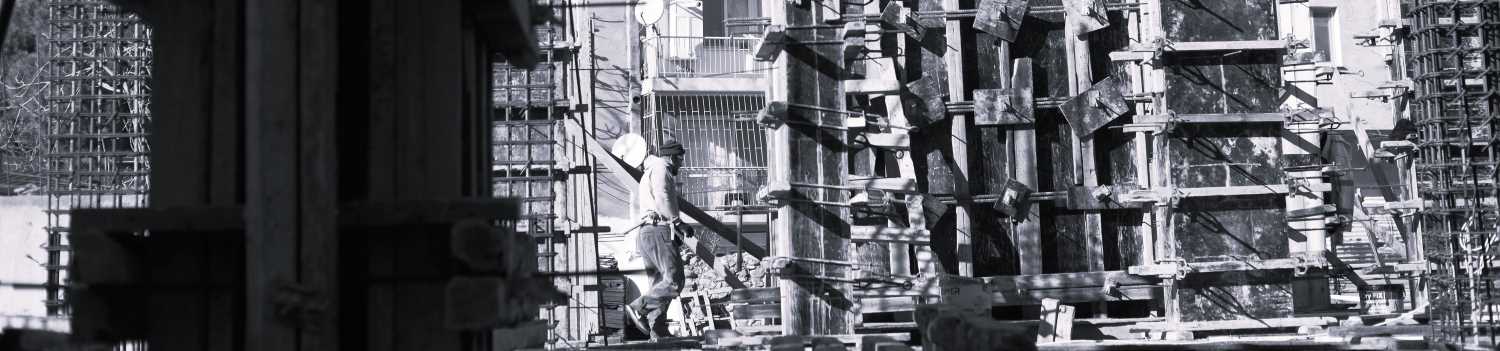
2. Why Should Evidence Be Preserved Before Filing a Case in Turkey?
Under Turkish law, the preservation of evidence should be carried out before filing because it records the incomplete and defective work through the court before the developer repairs or covers it up. In construction law disputes before the Turkish courts, physical evidence carries a high risk of disappearing quickly with time, weather conditions or interference. Unfinished work may be completed afterwards, just as faulty construction may be covered over and concealed.
- Request for a Site Inspection (CCP Art. 400/1-2): Under Art. 400 of the Code of Civil Procedure No. 6100 (CCP); each party may request a site inspection for the purpose of establishing a fact it will rely on in a pending case whose examination stage has not yet come or in a case it will bring, as well as an expert examination or the taking of witness statements. Under CCP Art. 400/2, a legal interest is deemed to exist where it is likely that the evidence will be lost if it is not established at once or that it will become considerably harder to rely on.
- Fixing the Amount of the Claim: The report prepared by the panel of expert witnesses appointed by the court as a result of the preservation of evidence documents the defects at the moment closest to the delivery date in terms of quantities, quality and cost. In the compensation or price reduction action to be brought, this report ensures that the value of the claim is correctly fixed and gives it evidential weight.
- Discharging the Notice Requirement in Time: The preservation file and the report served through the court are the strongest legal presumption proving that the statutory duty to give notice of the defect was discharged in time.
3. How Should a Warning Notice Be Sent to the Developer in Turkey?
In Turkey, a warning notice to the developer should be sent through a notary; the incomplete work and defects should be listed one by one, a reasonable period given for remedying them, and the optional right being exercised stated clearly. As regards the obligation to notify incomplete work and defects to the developer, following the preservation of evidence report, or at the same time, it is essential in both procedure and substance that a warning notice through a notary be sent to the developer.
An effective warning notice in Turkey should contain the following elements:
- Concreteness: The notice must not use general and abstract wording; the incomplete work and defective workmanship found must be set out concretely, item by item.
- Reasonable Period: The developer must be given a reasonable period to remedy the problems or to compensate the loss.
- Statement of the Optional Right: The notice must state clearly which optional right (repair, price reduction, compensation and so on) the buyer or owner of the work is exercising.
- Default and Reservation on Late Delivery: If delivery is late, the notice should also be used to fix the default and to reserve the right to claim the delay penalty.
4. What Lawsuits Can Be Brought Against the Developer in Turkey?
Under Turkish law, the actions that can be brought against the developer fall into two groups depending on whether the claim concerns ownership or a sum of money. Where the contractor fails to perform his contractual obligations at all, properly or on time, the legal routes open to the buyer or the landowner and the types of action that may be brought differ according to whether the claim is in the nature of a personal right (a claim) or a right in rem (ownership). The procedural regime to be applied, the pre-action mediation requirement and the competent court are also shaped by this distinction before the Turkish courts.
a. What Are the Cases Concerning the Substance of the Property in Turkey? (Title Deed Cancellation and Registration Lawsuits)
Under Turkish law, cases concerning the substance of the property arise where the contractor does not transfer ownership of the independent unit to the buyer even though he has completed the construction or performed his contractual obligations, and where, in flat-for-land construction contracts, the landowner wants the title deed back because the contractor has not performed his obligation. The main features of these actions are:
- Legal Character of the Case: These actions, aimed at transferring the ownership right or correcting or cancelling the land registry record, concern the ownership right directly. In registration actions brought by a consumer the Consumer Court has jurisdiction, while in disputes between the landowner and the contractor, or those who acquired by external sale, the Civil Court of First Instance does.
- Exception to Mediation as a Precondition: Under Article 73/A/1-d of Consumer Protection Law No. 6502, disputes that are consumer transactions and arise from the substance of the property (concerning the transfer of ownership) fall outside the scope of mediation as a precondition to the case. A claim for title deed cancellation and registration may therefore be filed directly in court.
- Interim Legal Protection (Precautionary Measure): To prevent the contractor from transferring the independent unit to third parties or from having a mortgage or attachment placed on it during the proceedings, it is vitally important in Turkey to have a precautionary measure annotation entered on the land registry record together with the statement of claim.
b. What Are the Cases Concerning Claims, Compensation and Optional Rights in Turkey?
Under Turkish law, where the contractor carries out incomplete work, delivers defective workmanship or falls into delay in delivering the home, the actions to be brought are in the nature of a claim (a personal right). The principal compensation and debt actions that may be brought against the developer before the Turkish courts on this basis are as follows:
- Action for the Cost of Incomplete Work and Defective Workmanship (Performance in His Name / Repair Cost): This is a claim for the collection from the developer of the expenses needed for the buyer or the landowner to complete the work left unfinished or defective.
- Action for a Reduction in the Price in Proportion to the Defect (Compensation): This is a claim for the loss of value in the property to be established and deducted from the sale price and for repayment of the excess price paid.
- Action for Loss of Rent on Late Delivery (Delay Compensation): This is brought to collect the comparable market rents (TCO Art. 125/para. 1) lost during the period in which the property was not delivered.
- Action to Collect a Contractual Penalty: Where a special fixed penalty for delayed delivery has been agreed in the contract signed between the parties, collection of that amount is claimed.
c. When Is Enforcement Without a Judgment Used in Turkey?
Before filing a case in Turkey, the creditor may start enforcement proceedings without a judgment (Sample No: 7) directly against the developer for monetary claims such as delay compensation, comparable rent loss or the cost of incomplete work and defective workmanship. If the debtor contractor objects to the payment order within the statutory period and stops the proceedings, the creditor must bring an action to set aside the objection (Enforcement and Bankruptcy Law Art. 67); but for that action too, where the claim arises from a consumer transaction and exceeds the arbitration committee limit, under Article 73/A of Law No. 6502, the mediation process required by Turkish law as a precondition to the case must have been carried out and have ended without agreement.
5. How Are the Competent Court and Venue Determined in Turkey?
In Turkey the competent court depends on whether the buyer is a consumer, and venue as a rule lies with the court where the property is located. The rules on jurisdiction in the Turkish legal system are a matter of public policy and are considered by the court of its own motion at every stage of the proceedings. Filing a case in a court without jurisdiction leads to dismissal on procedural grounds and to lost time.
- Consumer Court (Law No. 6502, Art. 73/1): The Consumer Courts have jurisdiction over all cases brought by consumers who buy the home from a developer for personal, non-commercial and non-professional purposes. Under CPL Art. 73/2: Consumers are exempt from court fees in cases they bring before the consumer courts.
- Civil Court of First Instance: Because disputes between the landowner and the developer based on a construction contract in return for land share are not consumer transactions, the competent court in those cases is the Civil Court of First Instance.
- Court with Venue: Under CCP Art. 12, in actions concerning a right in rem over immovable property (such as title deed cancellation and registration), the court of the place where the property is located has exclusive venue. Money claims such as compensation or a price reduction may be brought where the defendant is domiciled (CCP Art. 6) or where the contract is to be performed (CCP Art. 10); consumer cases may also be brought before the consumer court of the consumer’s domicile (CPL Art. 73/5).
6. What Are the Consumer Arbitration Committee Monetary Limits in Turkey (2026)?
In consumer disputes in Turkey, the obligation to apply to the Consumer Arbitration Committee before filing a case is subject to monetary limits. As of 2026, where the value of the dispute is below 186,000 TL, an application to the Consumer Arbitration Committee before filing is a mandatory precondition to the case. (That monetary limit was applied as 149,000 TL in 2025, and, increased by the revaluation rate under CPL Art. 68/4 by the Ministry of Trade’s communiqué published in the Official Gazette of 23.12.2025, it has been updated to 186,000 TL for 2026.) For disputes above the stated monetary limit, application must be made directly to the Turkish Consumer Court, and before the court the Mediation process required as a precondition to the case must be carried out.
7. Is Mediation a Precondition to Every Dispute in Turkey?
Under Turkish law, mediation is as a rule a precondition to filing in the consumer courts; however, disputes within the remit of the arbitration committee, objections to its decisions and disputes concerning the substance of the property are outside that requirement. The institution of mediation in consumer disputes in Turkey is often taken to be an absolute precondition to filing a case. However, Article 73/A of Consumer Protection Law No. 6502 (CPL) ties that rule to a mandatory framework by making it subject to certain exceptions.
Under CPL Art. 73/A of Law No. 6502, having applied to a mediator before filing a case in the consumer courts is as a rule a precondition to the case. The Turkish legislature has nevertheless kept the following situations outside that requirement:
- Disputes Within the Remit of the Consumer Arbitration Committee: For 2026, in disputes below 186,000 TL that fall within the remit of the Arbitration Committee, mediation is not a precondition to the case.
- Actions Objecting to Decisions of the Consumer Arbitration Committee: No application may be made to a mediator in objections lodged with the Consumer Court against decisions of the arbitration committee.
- Disputes Arising from the Substance of the Property: Even where they are consumer transactions, disputes concerning the substance of the property fall outside the scope of mediation as a precondition to the case.
What Can Be Done in Turkey If the Developer Has Absconded or Gone Bankrupt?
The ending of the developer’s legal personality, the cessation of its activities or its bankruptcy does not automatically extinguish the claim under Turkish law. The legal and procedural routes to be followed do, however, differ under the Enforcement and Bankruptcy Law; in off-plan sales, building completion insurance provides a separate guarantee.
1. What Procedure Is Followed in Turkey Where the Developer Is Liquidated or Goes Bankrupt?
In Turkey, if the developer company is in liquidation the claim is notified to the liquidators; if it is bankrupt the claim is registered with the bankruptcy estate. The route to follow in each case is as follows:
- In Liquidation: If the contractor’s company organs have not yet been dissolved but the company has entered liquidation, creditors should notify their claims for unfinished work or defective workmanship or for compensation for delay directly to the liquidators. On the basis of that notification the claim is entered in the liquidation balance sheet. Under Turkish commercial law, the liquidators are obliged to call on known creditors and to have their claims entered in the liquidation balance sheet. Before the company’s assets are distributed among the shareholders, an amount sufficient to cover debts that are not yet due or are disputed must be deposited with a notary, or those debts must be adequately secured (TCC Art. 541/3).
- In Bankruptcy: Once the Commercial Court of First Instance declares the developer company bankrupt, the whole of the company’s assets legally form the bankruptcy estate and individual enforcement proceedings in Turkey are as a rule stayed (Enforcement and Bankruptcy Law Art. 193). At this stage creditors must apply to the Bankruptcy Office and register their claims with the bankruptcy estate for the cost of the unfinished work, the loss of value in proportion to the construction defect and the compensation for delay.
2. How Does Building Completion Insurance Protect the Consumer Against Bankruptcy in Turkey? (Law No. 6502, Art. 42)
Under Turkish law, the strongest statutory security mechanism protecting consumers in off-plan home sales from the developer’s financial collapse, liquidation or bankruptcy is building completion insurance. This regime, laid down under Article 42 of Consumer Protection Law No. 6502 (CPL), gives consumer claims a mandatory legal guarantee going beyond the general law of bankruptcy and enforcement:
- The Principle That They Cannot Be Included in the Bankruptcy Estate (CPL Art. 42/2): Under paragraph 2 of Article 42 of the Law, the indemnity, security and similar guarantees provided under building completion insurance cannot be included in the bankruptcy or liquidation estate and cannot be attached. Nor may a precautionary measure or precautionary attachment be placed on them.
- Privileged and Direct Right of Collection: Thanks to this mandatory rule, where the developer goes bankrupt or the project is left half-finished because of a financial crisis, the consumer is not dependent on the ranking table or on the participation of other third-party creditors (banks, suppliers, attachment creditors) in the estate. The consumer has the right to collect the amounts he has paid, or the financing needed to complete the project, from the insurance company, the letter of guarantee or the progress-payment account directly and in priority under Turkish law, or to demand completion of the home.
3. Can the Developer Escape the Debt in Turkey by Setting Up Another Company? (Proving the Organic Link)
Under Turkish law, if the developer has set up a new company to escape the debt, the new company may also be held liable once an organic link between the two companies is proved. Where the contractor puts the existing company into liquidation, stops its activities and immediately afterwards tries to escape the debt by setting up a new company in Turkey at the same address, in the same field of activity, with a similar shareholding structure or in the name of close relatives, the question of an organic link arises.
Under the settled case law of the Turkish Court of Cassation, the main facts pointing to an organic link are:
- Similar Management: Similarity of the shareholding and management structure,
- Same Address and Activity: The company addresses, contact details and fields of activity being the same,
- Transfer of Assets: The old company’s assets and business volume having been transferred to the new one,
- Similar Name: Similarity of name or trade name.
Where circumstances such as these exist, the corporate veil is pierced under Turkish law. Creditors may then also direct an action or enforcement proceedings against the newly formed company (or ask for it to be held liable for the debt) and collect their claims for incomplete work, faulty construction or compensation from the assets of the new company.
Is the Landowner Liable in Turkey for Sales Made to 3rd Parties Under Construction Contracts in Return for Land Share?
Under Turkish law, a third party who buys a flat from the developer can demand only the title transfer from the landowner; for monetary claims such as defects, unfinished work and loss of rent, his counterparty is as a rule the developer. Whether third parties who buy an independent unit (a flat or shop) from the developer under a land-for-flat agreement can turn to the landowner where the contractor is in debtor’s default, delays delivery or carries out incomplete or defective work is assessed within the framework of the principles of assignment of a claim (TCO Art. 183 et seq.) and the principle of privity in the law of obligations in Turkey.
1. How Do the Transfer of the Personal Right and the Principle of Succession Work Under Turkish Law?
The contract for the sale of the independent unit between the contractor and the buyer (or the promise to sell) has, by its legal nature, the effect of transferring to the buyer the personal right the contractor will acquire in the future from the landowner (the right to demand transfer of the title deed) (assignment of a claim – TCO Art. 183). The consequences of this transfer for the buyer under Turkish law are:
- Raising Defences Against the Third Party (TCO Art. 188): When the buyer, as the contractor’s successor, demands registration of the title from the landowner, he relies on the contractor’s rights. However, under Article 188 of the Turkish Code of Obligations, the debtor (the landowner) may also raise against the assignee (the buyer) all the defences and objections he held against the assignor (the contractor) at the moment he learned of the assignment.
- The Completion-Rate Condition: Unless the contractor has fully performed his obligation towards the landowner (the duty to finish the construction in accordance with the project, the permit and the contract), the buyer cannot force the landowner to transfer the title in Turkey. According to the settled case law of the Court of Cassation, unless the building reaches a level the landowner cannot refuse (can tolerate) and the cost of any incomplete or defective work is deposited for payment to the landowner, the landowner keeps the right to refuse to transfer the title (the defence of non-performance).
- The Landowner Has No Direct Liability for Defects: Because there is no direct contract between the buyer and the landowner, hidden or obvious defects in the home, incomplete work or compensation for loss of rent cannot be claimed directly from the landowner. For these monetary claims the buyer’s only counterparty is the contractor with whom he made the contract.
2. What Are the Evidential Risks and Legal Consequences in Turkey of Declaring a Low Sale Price at the Land Registry?
Under Turkish law, declaring a low sale price at the land registry makes it seriously harder for the buyer to recover the amount actually paid in an action for rescission or repayment of the price. Declaring the sale price at the land registry below the true economic value in Turkey in order to reduce the title deed fee or to avoid tax obligations (simulation as to price) produces serious consequences against the buyer where the developer falls into default or the contract is terminated.
- The Burden of Proving the Contrary of the Official Deed (CCP Art. 201): In actions for rescission, liquidation or repayment of the price, the developer will as a rule argue that he is obliged to return only the official price declared at the land registry. Under Article 201 of the Code of Civil Procedure No. 6100, a deed must be disproved by another deed. A buyer who claims the contrary of the sale price written in the official title deed must prove that he paid a higher price by a written document (a bank receipt, an approved supplementary contract, a collection receipt and so on); as a rule, witnesses cannot be heard. Witnesses may, however, be heard where there is a document amounting to initial evidence (CCP Art. 202) or one of the exceptions listed in CCP Art. 203 applies.
- Tax Risk: Moreover, because under-declaring the sale price changes the tax bases for items such as value added tax, income tax and capital gains, the parties may also face tax penalties.
- Losses in Discount and Compensation Calculations: In actions for a price reduction in proportion to the defect or for the cost of incomplete work, there is a risk that the official sale price will be taken as the basis in the calculations made on the rates and figures adopted by the court. That creates losses that are hard to make good between the real price paid and the amount legally recoverable.
Do Foreigners Have the Right to Sue the Developer in Turkey for Defective, Incomplete or Late Delivery?
Foreign natural or legal persons who acquire property in Turkey have a full right to sue the developer and to use the legal remedies where the developer fails to perform his obligations, delivers the home late, or the property contains defective or incomplete work. No distinction is drawn between citizens and foreigners as regards the right to seek justice in the Turkish legal system, and within the legislation in force the Turkish courts also have full jurisdiction over the contractual and ownership disputes that arise after foreigners acquire real estate in Turkey. However, navigating cross-border property disputes, strict statutory notice periods, and local court procedures can be highly complex for non-resident investors. Therefore, consulting an experienced English-speaking lawyer in Turkey is essential to fully understand the legal rights, avoid costly procedural errors, and secure remedies such as compensation or property repairs effectively.
1. What Are the Foreign Buyer’s Right to Seek Justice and the Applicable Law in Turkey?
Under Art. 40 of Law No. 5718 on Private International Law and Procedural Law (PILA), the international jurisdiction of the Turkish courts is determined by the domestic rules on venue. If the foreign buyer holds consumer status, he enjoys all the rights given by Law No. 6502 (rescission of the contract, a price reduction, free repair, or compensation for the construction defect or the delay) on equal terms with Turkish citizens.
2. What Are the Obligation to Provide Security (PILA Art. 48) and Its Exceptions in Turkey?
Foreign natural and legal persons who bring an action before the Turkish courts are as a rule obliged to provide security. The rule and its exception are set out in PILA Art. 48 as follows:
- Scope of the Security: The security is fixed by the court to cover the costs of the proceedings and enforcement and the losses of the other party (PILA Art. 48/1).
- Reciprocity: The court exempts the claimant from security on the basis of reciprocity (PILA Art. 48/2).
3. Which Is the Competent Court and Venue for a Foreign Buyer in Turkey?
In disputes concerning the substance or possession of the property, under CCP Art. 12 the court of the place where the property is located has exclusive venue in Turkey. A foreign buyer may bring title deed cancellation and registration actions, or actions for compensation for defective workmanship or incomplete work, against the developer before the competent Consumer Court or Civil Court of First Instance in the place where the project is located.
You can explore our other articles or contact us for your legal support inquiries.
Legal Disclaimer: The copyright in the articles and content on this website belongs to Attorney Orbay Çokgör; the content may be quoted provided that the source is credited and an active link to the relevant page is given. All content on this website is for general information purposes only, does not constitute legal advice and does not create an attorney-client relationship. The information may have become outdated due to changes in legislation and case law; for your specific legal situation, always seek legal assistance from a lawyer.